Mwatana
HomeMwatana website
About the mapHistorical backgroundLegal frameworkThe Yemen file with the UN team

Releases

Browse releases published in the backend.

Showing 1-10 of 27 releases

Qahtan-en.jpeg
Blog

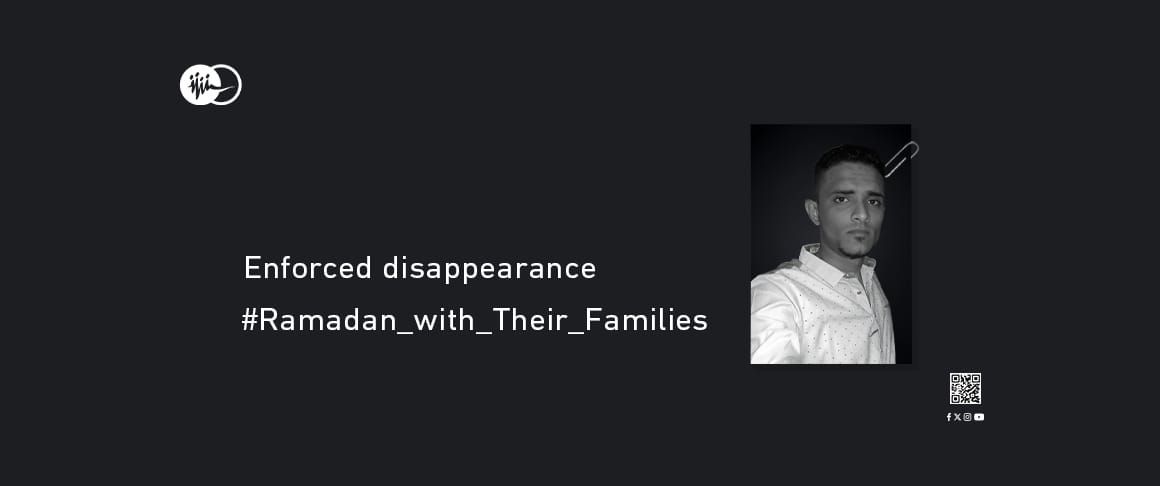
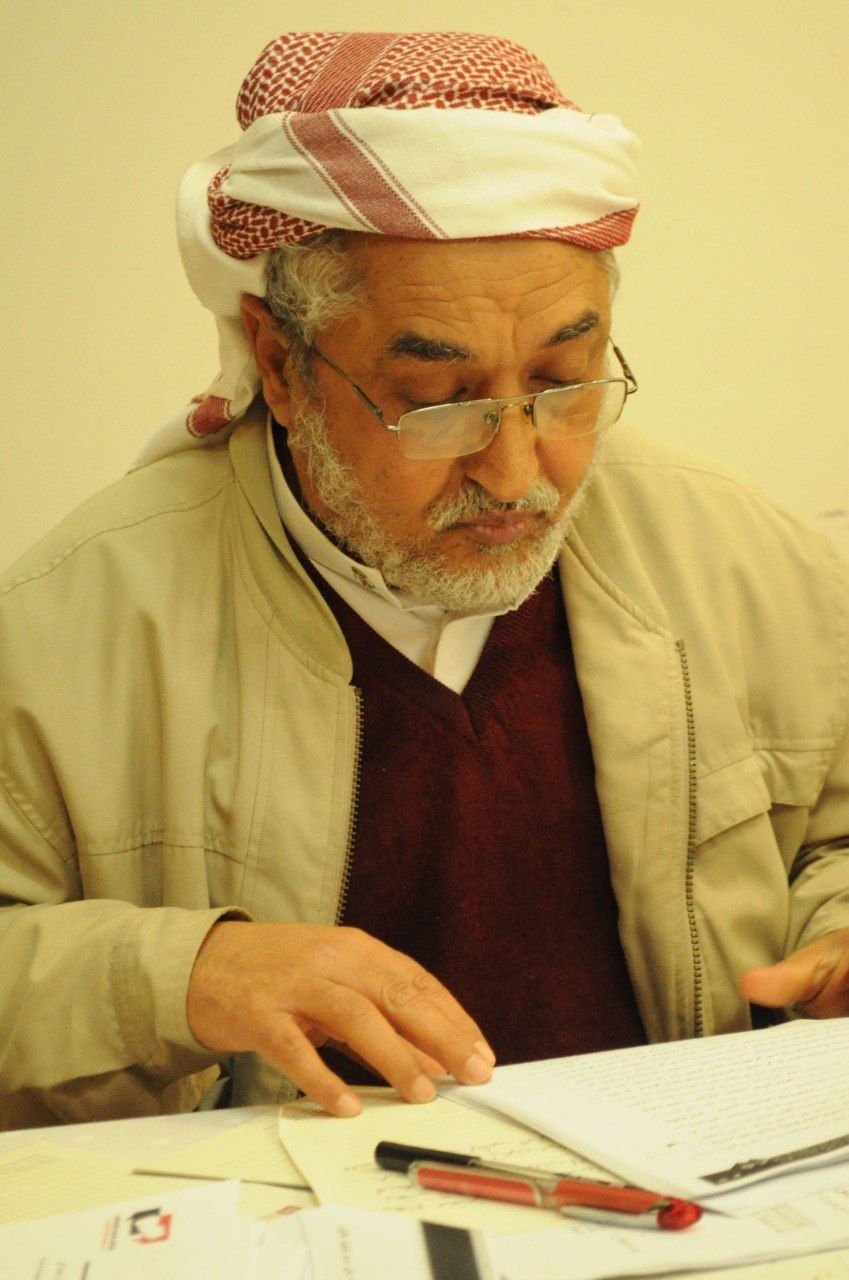
Mohammed Qahtan: Yemeni Politician and His Family in Darkness

No one, not even Muhammad Qahtan’s family, expected that April 4th, 2015 would be the final day they would see his face and know with confidence that he was fine. On that day, a military force from the Ansar Allah group (Houthis) stormed the home of leading figure, Mohammed Qahtan, of the Yemeni Congregation for Reform (Islah), Muhammad Qahtan. They took him, body and soul, from his family and tossed him into the midst of complete disappearance. On April 4, 2023, Mr. Qahtan forced disappearance marked its eighth year. Eight years long and the Houthis refused to disclose his fate, with no visit, no contact. There is not any information that can be based on to make sure that his health is all right. It is a forced disappearance crime against a politician approaching his sixties, and against his family that doesn’t know whether their beloved man is in an appropriate place to sleep or suffering and lacking necessary care. In February 2015 the Houthi gunmen had stopped Mr.Mohammed Qahtan at a checkpoint in Ibb governorate when he was on his way to Taiz city and they returned him back to his house in Sana’a and put him under house-arrest until the day on which he was arrested in April. Then, they allowed his son to visit him one single time in the early days of his detention. At that time he was detained in a house belonging to one of the political leaders, the house was controlled by the Houthi group when they took over Sana’a. Afterwards, Qahtan was moved to detention and the Houthi group denied him any visit and held back from offering any clarifications about his fate. There are other detainees the Houthi group has committed the same crime against them and their own families. By doing so, the group has recalled the specter of severe political eras where forced disappearance in Yemen has got a long history of cruelty. There is still a large number of people who had been forcibly fully disappeared by the political regimes in the south and the north of Yemen since 1962, whose fates are still unknown until now. Mr Qahtan has five daughters and four sons. He has been a senior member of the High Commission of Al-Islah Party since 2007. His daughter, (23 years) told Mwatana in an interview about some details of her father’s arrest. She said a group of gunmen in the Republican Guards troops uniform boarding two Hilux pick-up cars came to their house in Al-Nahdhah neighborhood, in the capital Sana’a, at around 1:00 P.M. on April 4, 2015, they sought for her dad. She went on saying:” My father was asleep when the Houthis came, my brother and my husband prevented them from entering the house, then my father woke up and performed his Wadhoo (washed his face, hands, legs) to perform midday prayers. He told them that he would perform the prayers in their sight and go with them, but they didn’t allow him to do so and took him soon with them. she depicts the mood the family experienced in the wake of the detention saying:” We remained in darkness, we don’t know where is my father?” This glimpse has been presented by his daughter about the circumstances of her father’s forcibly disappearance is all she could say. This is what the forced disappearance crime always does it leaves the family of the disappeared person without any details or prospects. Qahatan’s wife, therefore, couldn’t answer our questions about him, but with many silent tears which have been continuing to flow down… The forced disappearance crime is extending one to touch upon the victim and his family, not only Mr. Qahtan’s family alone has experienced this ordeal. The Houthi group from September 2014 until now has carried out a series of arbitrary detention, most of which have undergone different levels of forced disappearance; a number of those detainees are still forcibly disappeared until now. Regardless of the forcibly disappeared people are in dark detentions or light may be leaked into their incarceration, and their families are living in darkness. The Houthi group should disclose the fate of Mr. Qahtan and all forced disappeared people and set them free. The group must remember that the forced disappearance crime is one of the crimes against humanity that is stipulated in the international conventions as International Convention for the Protection of All Persons from Enforced Disappearance, the UN Declaration also stipulates the protection of all persons from a forced disappearance. It is not allowed to cite exceptional conditions whether related to a state of war or the threat of war may break out or the state of internal political insatiability or any other case to justify the forced disappearance. In the international agreement for the protection of all people from a forced disappearance. Forced disappearance is:” the arrest, detention or abduction of persons by, or with the authorization, support or acquiescence of, a State or a political organization, followed by a refusal to acknowledge that deprivation of freedom or to give information on the fate or whereabouts of those persons, with the intention of removing them from the protection of the law for a prolonged period of time. The Rome basic system of the International Criminal Court (ICC) which was endorsed in Rome on May 17, 1998, the enforced disappearance implies crimes against humanity.
View release
2_1.png
Literature

International Convention for the Protection of All Persons from Enforced Disappearance

View release
Video

The Unknown Fate

After nearly a decade of war ravaging Yemen, the film "Unknown Fate" sheds light on a deep wound inflicted by Enforced Disappearances, which continue to haunt thousands of families. The film presents poignant stories of individuals who have fallen victim to ongoing cycles of political conflict and reveals the heavy legacy these crimes leave across generations. By tracing the impact of these horrific violations carried out by successive authorities and power factions, "Unknown Fate" highlights the suffering of the forcibly disappeared and their families and underscores the enduring impact of these violations on society as a whole.

View release
Suspended Fates en.jpg
Report

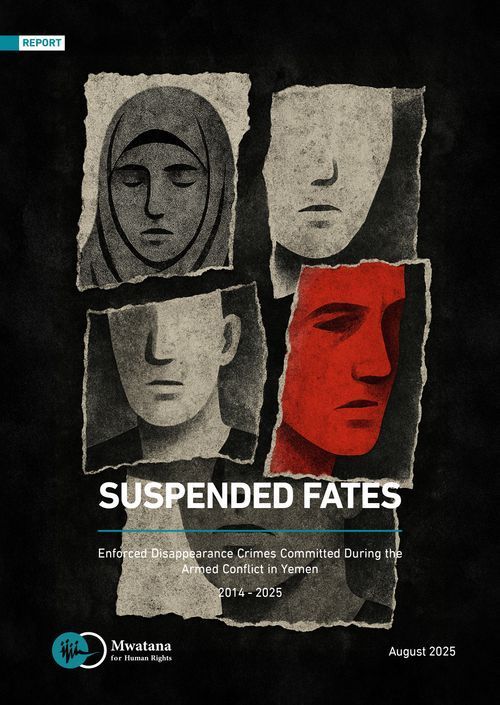
Suspended Fates

Enforced Disappearance Crimes Committed During the Armed Conflict in Yemen (2014–2025)

View release
Ehab-en.jpeg
Blog

I Searched for My Son Even Among the Corpses:Ehab Faisal… The Endless Years of Absence

In the early hours of Wednesday, November 16, 2016, a military force from the "Transport Brigade" raided the "Dar Hotel" building in the Dar Saad district of Aden. The soldiers were wearing military uniforms and were driving several vehicles belonging to the brigade, which was at that time under the internationally recognized government. During the raid, Ehab Faisal Ali Nasr Radman, a 24-year-old daily laborer, was arrested and taken to the brigade's camp in Dar Saad. ‍ In the camp, Ehab was subjected to severe mistreatment and torture, according to statements from his family, which included beatings on the hands and feet and burns to various parts of his body, including sensitive areas. After about two months, his family was allowed to visit him. That brief visit was the last proof that he was still alive. He was later transferred from the Dar Saad prison to an unknown location, and since then, security authorities have denied having any information about him, leaving his fate unknown to this day. ‍ His father, Faisal Radman, recounts that the Dar Saad camp was under the internationally recognized government, and with the escalation of armed confrontations between those forces and the Southern Transitional Council(STC), camp officials feared the site might be bombed. According to what the family learned, Ehab was taken out of his cell and placed inside an armored vehicle near the camp, a move his father considered an attempt to dispose of him in the event the site was targeted in an airstrike. The bombing never occurred, but Ehab was then moved to an unknown location, and since that moment, there has been no news about him. ‍ The family began a strenuous search between official and unofficial prisons. They visited the Dar Saad prison, the Transport Brigade camp, Bir Ahmad, and other detention sites, but all authorities denied having him in custody. On one occasion, the director of criminal investigations in the governorate called a security official in Dar Saad in front of Ehab's father, who confirmed that Ehab was in their custody, only to later retract his statement minutes later, claiming it was a mistake. Hope would arise for a moment, then suddenly be snatched away. ‍ The family filed notes and complaints to the former security director of Aden, and to the Attorney General, who referred the complaint to the head of the Appeal Prosecution, from there to the military prosecution. However, none of these entities took any real action to uncover his fate, and the case remained unresolved. ‍ During the years of searching, Ehab's mother passed away while he was still forcibly missing. Even in her last moments, she dreamed of seeing him alive and embracing him once more, before leaving this world with her heart hung on an unfulfilled hope. ‍ In March 2021, the family received a call from the Dar Saad police requesting that Ehab's father come to identify bodies found buried in the yard of the Transport Brigade commander. The father went, burdened with fear and hope, examined the corpses one by one, but informed the police that his son's body was not among them. This was not the end of their suffering, but another chapter of waiting. ‍ Since November 2016 until today, many long years have passed since the enforced disappearance of Ehab Faisal without any charges, or any judicial proceedings, or enabling his family to know his whereabouts. His fate remains unknown, within a broader context of enforced disappearances that have occurred in Aden and other areas during the years of conflict. ‍ The internationally recognized government must reveal the fate of Ehab Faisal and all those forcibly disappeared, release those held arbitrarily, work to end the crime of enforced disappearance that still affects hundreds of victims in Aden and other regions, and open independent and transparent investigations to identify those involved in the crimes of enforced disappearance and hold them accountable, as well as provide redress for the victims and their families and compensate them for their suffering. ‍

View release
4_1.png
Literature

Universal Declaration of Human Rights

View release
Crimes of Enforced Disappearance.jpg
Report

Crimes of Enforced Disappearance

A Research Paper Addressing Challenges and Proposing Solutions

View release
eman-en.jpeg
Blog

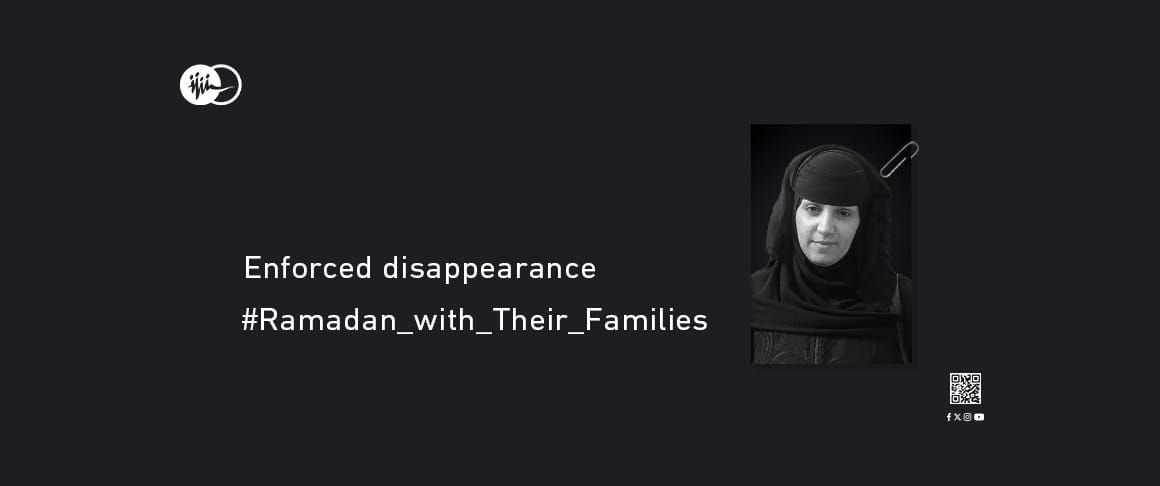
Eman Al-Bashiri:Enforced Disappearance for the Second Time in Sana'a

On Friday, June 26, 2020, it seemed like an ordinary day in the Bayt Mayad neighborhood of the Sab'een District in Sana'a city. Eman Muhammad Yahya Al-Bashiri, a 34-year-old Yemeni woman and housewife, was going about her daily life when she left her home in the afternoon. However, something broke that day, as she simply did not return — she was forcibly disappeared. ‍ This was not the first time Eman had been subjected to disappearance. She had endured another enforced disappearance in February 2019. That day, Eman went out to throw away the garbage but did not come back. A car with tinted windows stopped beside her, containing two women and a man in civilian clothes. They asked her for the location of the Ministry of Education, then she felt a prick in her hand and lost consciousness. ‍ Her mother, Mrs. Habiba Muhammad, 60 years old, recounts bitterly: "In the first instance, Eman went out to throw away the garbage. A car stopped beside her, with two women and a man in civilian clothes. They asked her where the Ministry of Education was, and then she felt a prick in her hand and lost consciousness. We searched for her for a long time until we received a call from an unknown number. It was Eman on the other end, crying and asking us not to abandon her." ‍ After six months, on a day in December 2019, Eman returned home. But what returned was not the same body, nor the same soul. She was frighteningly emaciated, her skin covered in bruises, crawling on the ground because she could no longer walk. Her vacant eyes... all told a story that words failed to express. ‍ Her mother, Mrs. Habiba Muhammad (60 years old), with tears in her eyes, says: "My daughter didn’t want to talk much. She dismissed us with sarcastic smiles. She told us once: 'I was in prison, not in a hotel.' That was all we got from her." ‍ Despite her wounds, Eman began to regain some of her health, little by little. However, fate did not allow her much time. In June 2020, just six months after her release, Eman went out to buy some food and forcibly disappeared again, as if the earth had split open and swallowed her. ‍ Since that day, the family has not received any confirmed news about her. They knocked on every door, filed official memorandums, enlisted lawyers, and appealed to security and judicial institutions. Yet no one responded. The replies ranged from "We don’t know" to "We don’t have her," and sometimes even "Maybe she ran away." ‍ Her mother says: "We went to the criminal investigation unit; at first, they denied her existence. Then suddenly, they contacted us during Ramadan 2023, telling us: 'Bring a paper from the neighborhood chief and come to take her.' We rejoiced, we cried, we hurried... but upon our arrival, they said she was not there. After that, they requested clothes and food for her, then returned to deny everything." ‍ The voice of Eman's mother is not unfamiliar in Yemen. It is the voice of dozens of mothers, wives, and daughters who carry pictures of their missing loved ones, moving from one place to another between confusion and hope, knocking on closed doors, searching for a spark of truth or a thread of mercy, only to know: "Are they still alive?" ‍ The Ansar Allah armed group (Houthis) must reveal the fate of Eman Al-Bashiri, disclose the fate of all forcibly disappeared individuals, release all those detained arbitrarily, work to end the crime of enforced disappearance that still affects hundreds of victims in areas under their control, and open transparent and independent investigations to identify those involved in the crimes of enforced disappearance and hold them accountable, as well as provide redress for the victims and their families ‍

View release
8_1.png
Literature

Constitution of the Republic of Yemen

View release
In the Darkness.jpeg
Report

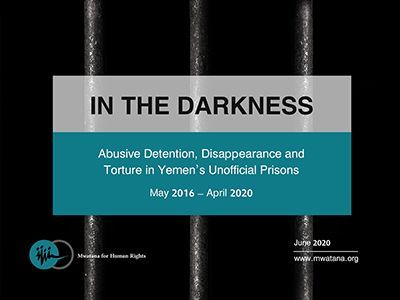
In the Darkness

Abusive Detention, Disappearance and Torture in Yemen's Unofficial Prisons- May 2016 – April 2020

View release

Page 1 of 3

Report an incidentRequest infoSuggestions and feedback
Mwatana for Human Rights

Document - Support - Influence

A Society in which human rights and justice are enjoyed by all

Mwatana websiteAbout the mapHistorical backgroundThe Yemen file with the UN team

Follow us

Copyright © 2026 Mwatana